Max Trading is well aware of the importance of ignition system accessories for motorcycle safety, and has built a full chain quality control system from raw materials to finished products to guaranteeing the reliability of every product with professional standards. Max Trading also has a deep understanding of market requirements in different regions over the world, offering customized solutions to customers with professional services and becoming a trusted partner for global customers.
The motorcycle ignition system mainly contains: motorcycle relay, motorcycle flasher, motorcycle spark plug, motorcycle ignition coil, motorcycle oil switch, motorcycle ignition switch, motorcycle magneto coil and so on.
Motorcycle Relay
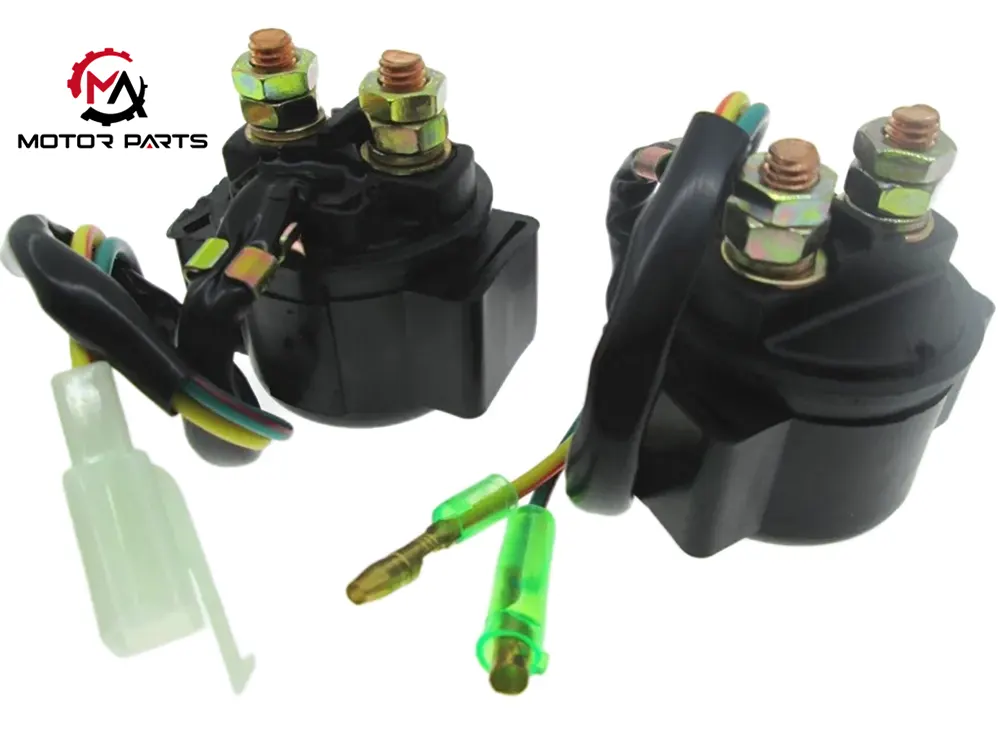
The essence of a motorcycle relay is an electromagnetic control switch, whose core function is to control the on/off of high current circuits (such as the starter motor and headlight main circuit) through small currents (such as the 12V signal output from the ignition switch), to prevent the low current circuit from directly carrying high loads and causing burnout. In addition, some models are equipped with headlight relays, horn relays, etc., all of which play a role in "current amplification" and circuit protection.
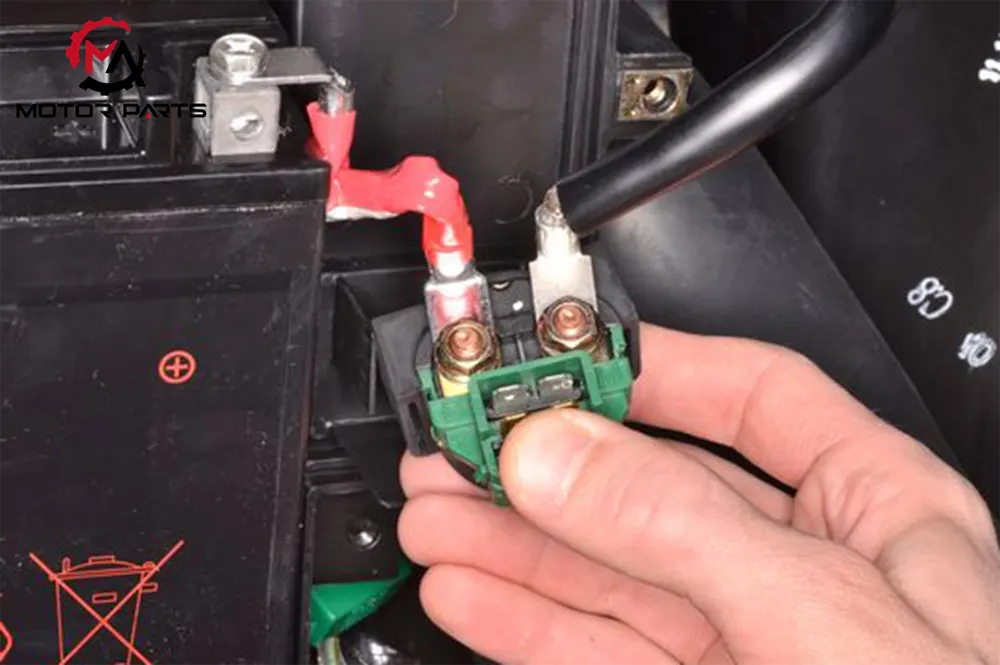
Structure composition: It consists of a coil (made of enameled copper wire winding), an iron core, a contact group (dynamic contact, static contact), and a reset spring. The shell is mostly made of flame-retardant plastic, and the waterproof level is usually IPX4.
Working principle: After the coil is energized, it generates electromagnetic force that attracts the iron core to drive the moving and stationary contacts to close, connecting the high current circuit; After power failure, the spring resets and the contact opens to cut off the circuit.
Core parameters: Operating voltage of 12V (suitable for mainstream motorcycle power supply systems), coil resistance of 15-30 Ω (typical value for starting relays), rated contact current of 30-50A (meeting the instantaneous high current demand of starting motors), and a lifespan of ≥ 10000 on-off cycles.
Motorcycle flasher
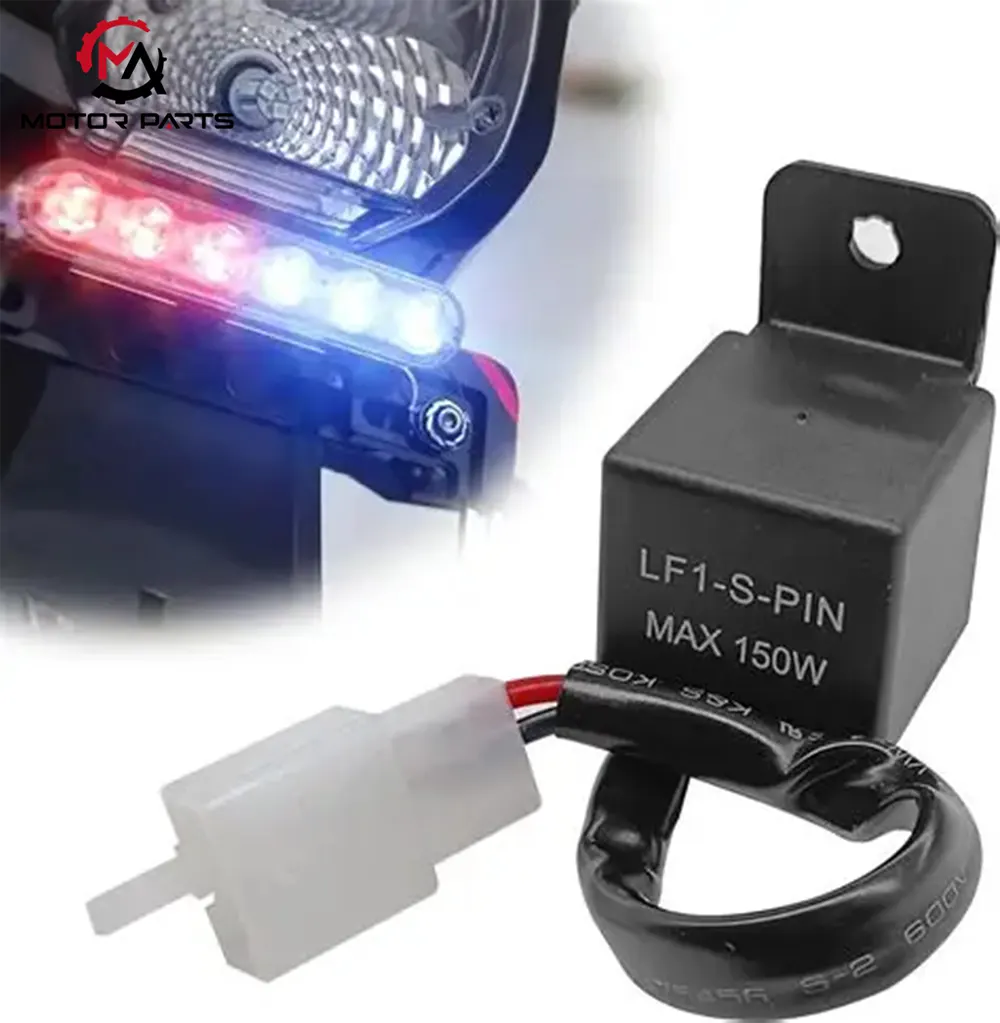
As the core controller of the motorcycle turn signal system, the flasher plays an important role in converting DC power into periodic on-off current. Through precise control, it can make the left and right turn signals flash at a stable frequency of 1-2 times per second, effectively reminding surrounding vehicles and pedestrians to pay attention to their turning intentions. This component is directly connected to the ignition switch and turn signal switch: the ignition switch provides working power for it, while the turn signal switch transmits steering commands. When the driver turns on the steering operation, the flasher will quickly respond to the switch signal and drive the corresponding side turn signal to flash. Some models of flashers also integrate hazard warning function, which can achieve synchronous high-frequency flashing of left and right turn signals, further enhancing the warning effect of the vehicle in emergency situations.
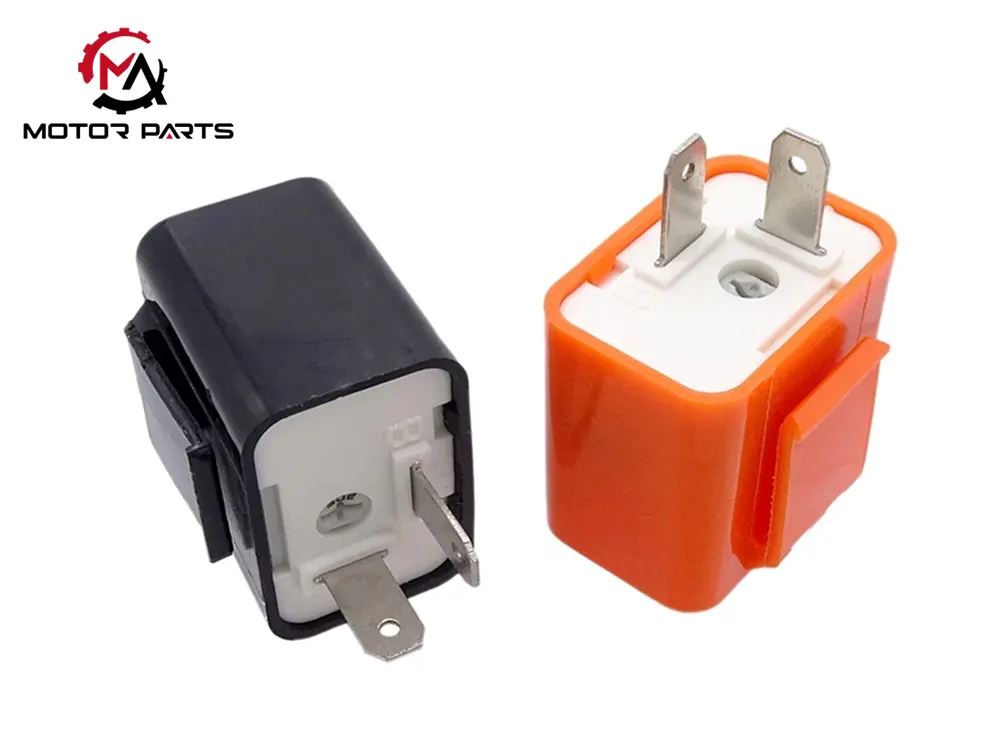
Motorcycle flashers are mainly split into three categories:
Electric heating flasher (traditional model): composed of electric heating wire, bimetallic strip, and contacts. The electric heating wire is used to generate heat and deform the bimetallic strip, driving the contacts to switch on and off to achieve flashing. The advantages are simple structure and low cost, but the disadvantage is that the flicker frequency is greatly affected by voltage and temperature (flicker slows down when the voltage is low), making it suitable for halogen turn signals.
Capacitive flasher (upgraded version): Control the conduction and cutoff of the transistor through capacitor charging and discharging, and adjust the current of the turn signal. The flicker frequency is stable (not affected by voltage fluctuations), and the lifespan is three times longer than that of electric heating type. It is suitable for halogen lamps and low-power LED lamps.
Intelligent LED Flasher (High End Version): Equipped with an MCU chip, it can automatically distinguish the power of the turn signal (1-21W) and adapt to the LED turn signal without the need for additional load resistors. It sustains adjustable flashing frequency (1.2-1.8 times/second) and some even have a turn signal buzzer reminder function. It is an essential component for retrofitting LED turn signals.
Motorcycle spark plug
The spark plug is the final executing component of the ignition system, responsible for converting the 10000-30000V high-voltage electricity output by the high-voltage pack into sparks, igniting the mixture of gasoline and air in the combustion chamber, and pushing the piston to do work. It is directly installed on the engine cylinder head, with its head extending into the combustion chamber. The working environment is high temperature (center electrode temperature 600-800 ℃) and high pressure (combustion chamber pressure can reach over 10MPa), which is a key component that determines the engine's starting performance, power output, and fuel economy.
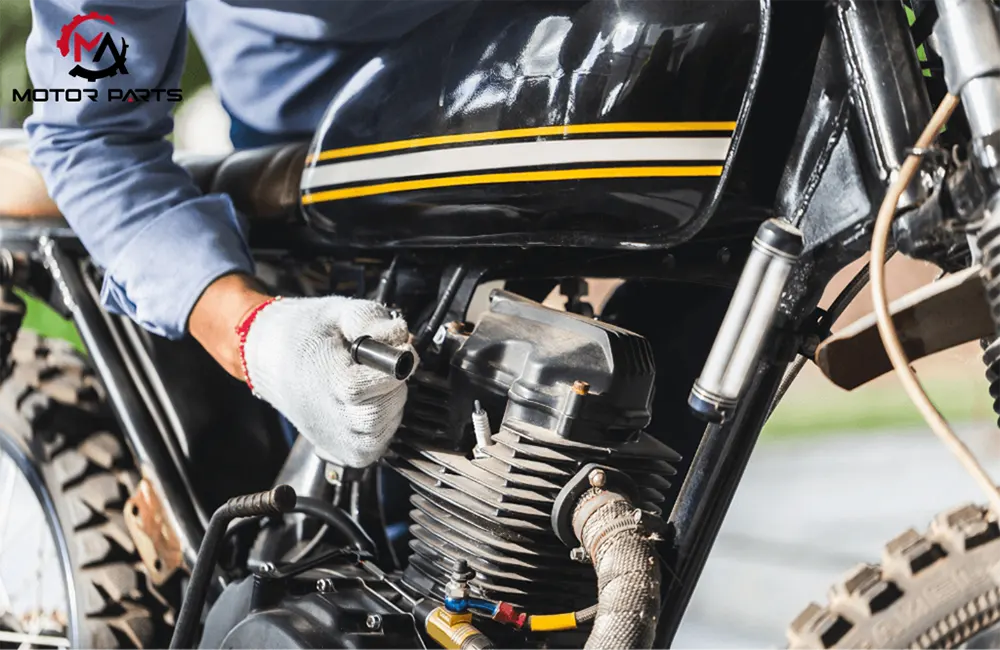
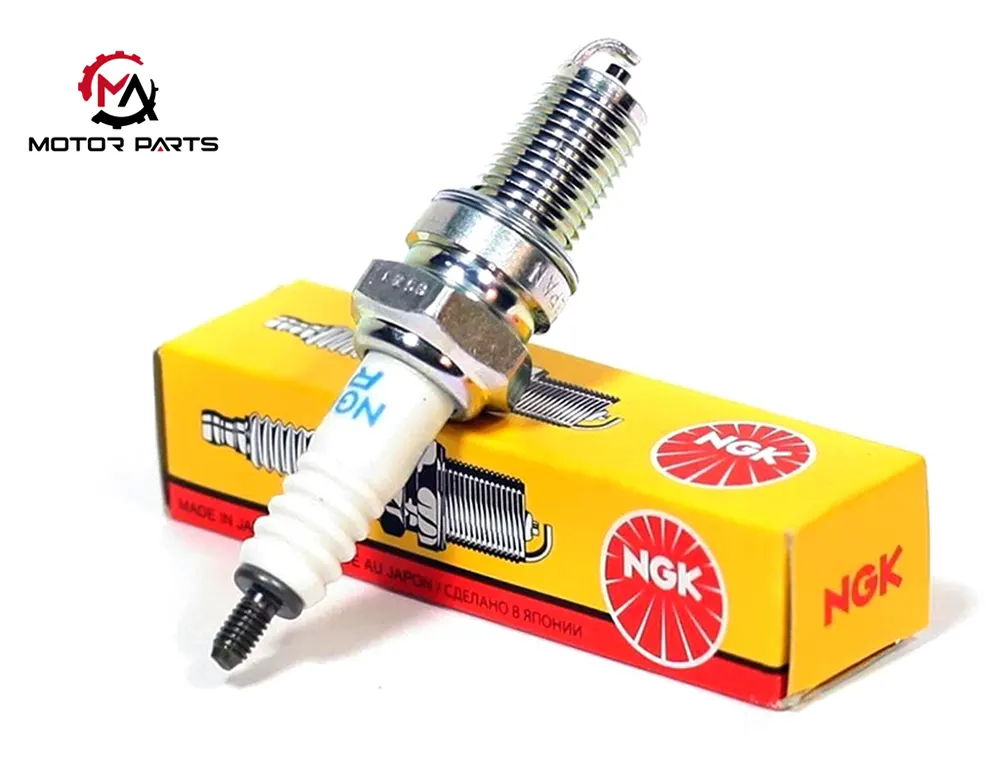
Structural composition: It consists of a central electrode (made of copper core nickel alloy/iridium/platinum material), side electrodes, insulation (made of alumina ceramic, resistant to high temperatures above 1200 ℃), and a shell (made of carbon steel with threads). The head gap is usually 0.7-1.1mm (different gaps are suitable for different vehicle models).
Type classification: Divided by electrode material into nickel alloy (with a lifespan of 10000-20000 kilometers and high cost-effectiveness), platinum (with a lifespan of 30000-50000 kilometers and good stability), iridium (with a lifespan of 50000-80000 kilometers and high ignition efficiency, suitable for high-performance engines); According to calorific value, it is divided into cold type (calorific value number 5-7, suitable for large displacement and high-speed engines), medium type (3-5, suitable for 125-250cc conventional models), and hot type (1-3, suitable for small displacement and low-speed engines).
Core parameters: Thread specifications (commonly M10 × 1.0, M12 × 1.25, matching cylinder head threads), hexagonal edge size (16mm, 19mm, corresponding wrench size), calorific value number (matching engine displacement and usage scenario).
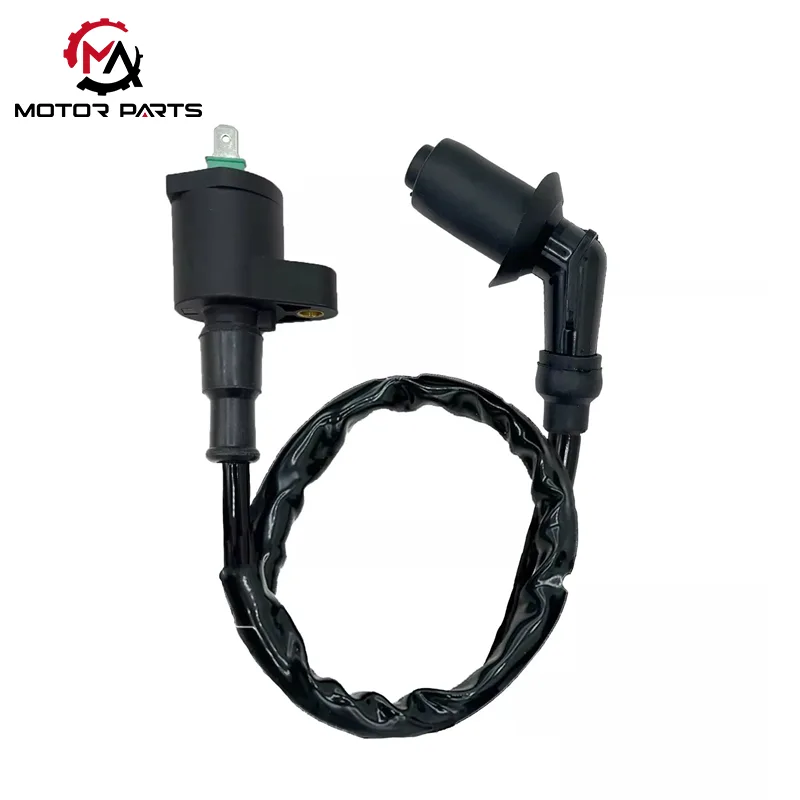
Motorcycle ignition coil
The ignition coil, also known as the high-voltage pack, is the "high-voltage generator" of the ignition system, responsible for converting the 12V low-voltage electricity output by the battery into 10000-30000V high-voltage electricity, providing ignition energy for the spark plug. It achieves voltage amplification through the principle of electromagnetic induction. One end is connected to the igniter (to obtain the ignition signal), and the other end is connected to the spark plug through a high-voltage wire. When the igniter sends a trigger signal, the primary coil of the high-voltage package is powered off, and the secondary coil induces high-voltage electricity, which breaks through the air through the spark plug to generate sparks.
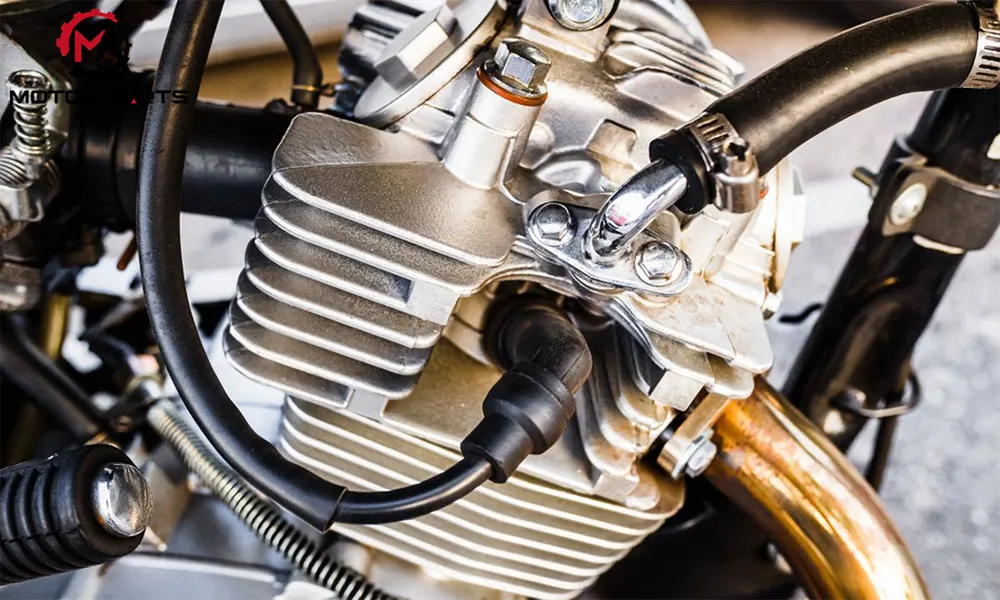
Structure composition: It consists of a primary coil (with fewer turns, about 100-300 turns, thick enameled wire), a secondary coil (with more turns, about 10000-30000 turns, thin enameled wire), an iron core (stacked with silicon steel sheets to enhance magnetic flux), and a shell (sealed with epoxy resin and waterproof insulation). Some models have an integrated design (with a built-in igniter, known as the "ignition coil assembly").
Working principle: The igniter controls the primary coil to be energized (current 5-8A), and the iron core stores magnetic field energy; When the ignition signal is triggered, the primary coil loses power, the magnetic field changes rapidly, and the secondary coil induces high voltage electricity (the turns ratio determines the voltage, secondary: primary ≈ 100:1).
Core parameters: primary coil resistance of 0.5-2 Ω (measured in ohms with a multimeter on the low voltage side), secondary coil resistance of 8-15k Ω (measured on the high voltage side between the high voltage pack output and primary input), output voltage ≥ 15000V (to ensure reliable ignition of the spark plug), operating temperature -30 ℃ to 120 ℃.
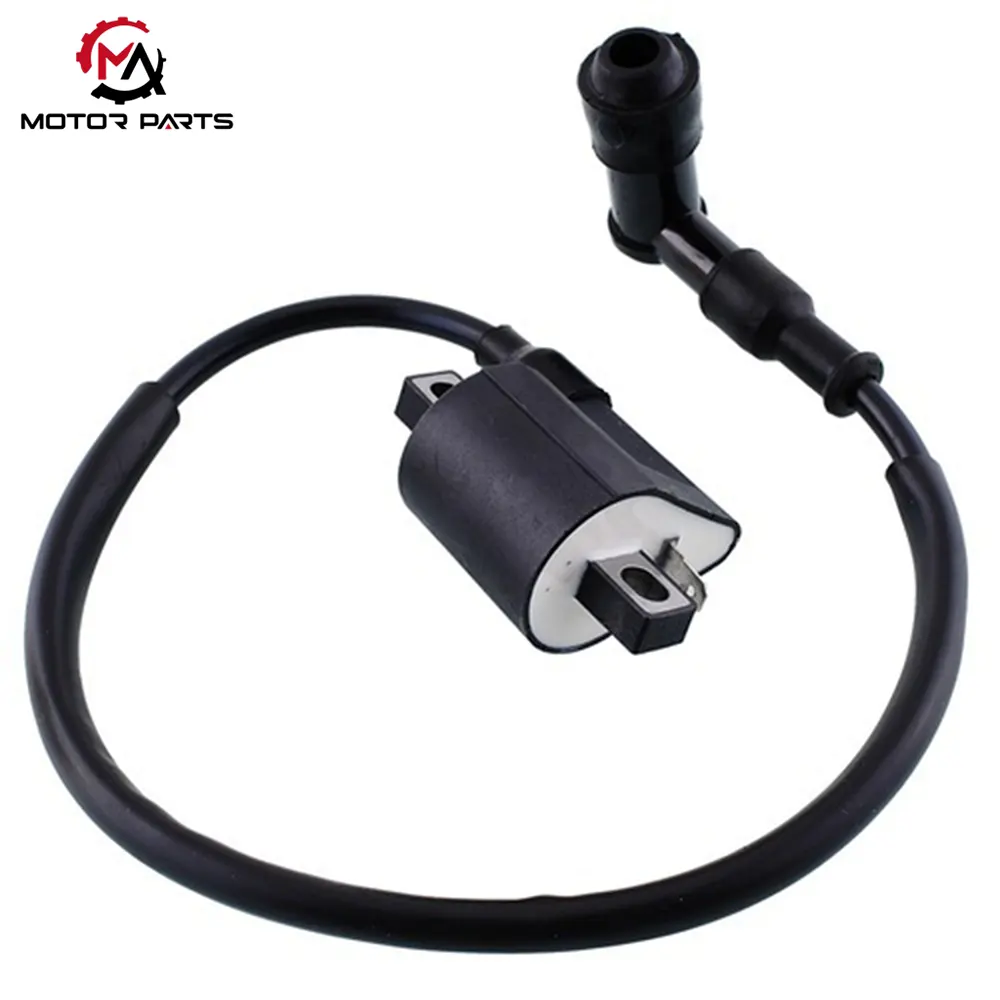
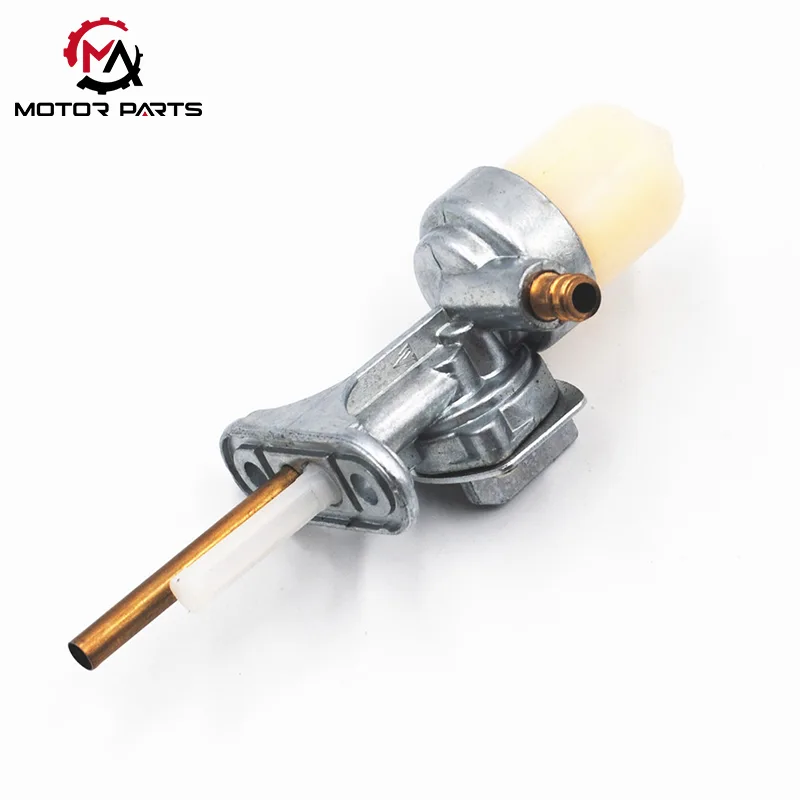
Motorcycle oil switch
The oil switch is a control valve for the fuel supply system, installed at the bottom of the fuel tank, responsible for controlling the flow of fuel from the tank to the carburetor (or fuel pump of the electronic fuel injection system). It also has three gears: "main fuel", "backup fuel", and "off", to respond to different fuel levels in the tank. Although it does not directly belong to the ignition system, fuel supply is a prerequisite for successful ignition (without fuel, a mixture cannot be formed), so it works in conjunction with the ignition system - when the ignition switch is turned on and the fuel switch is in the "main fuel" or "backup fuel" position, fuel can enter the combustion chamber to participate in ignition.
Type classification: According to the control method, it can be divided into manual oil switch (mainstream, switching gears by rotating the handle) and vacuum oil switch (commonly used in electronic fuel injection models, controlled by the vacuum degree of the engine intake manifold, opening the oil valve with vacuum suction during ignition and closing it during shutdown to prevent fuel leakage).
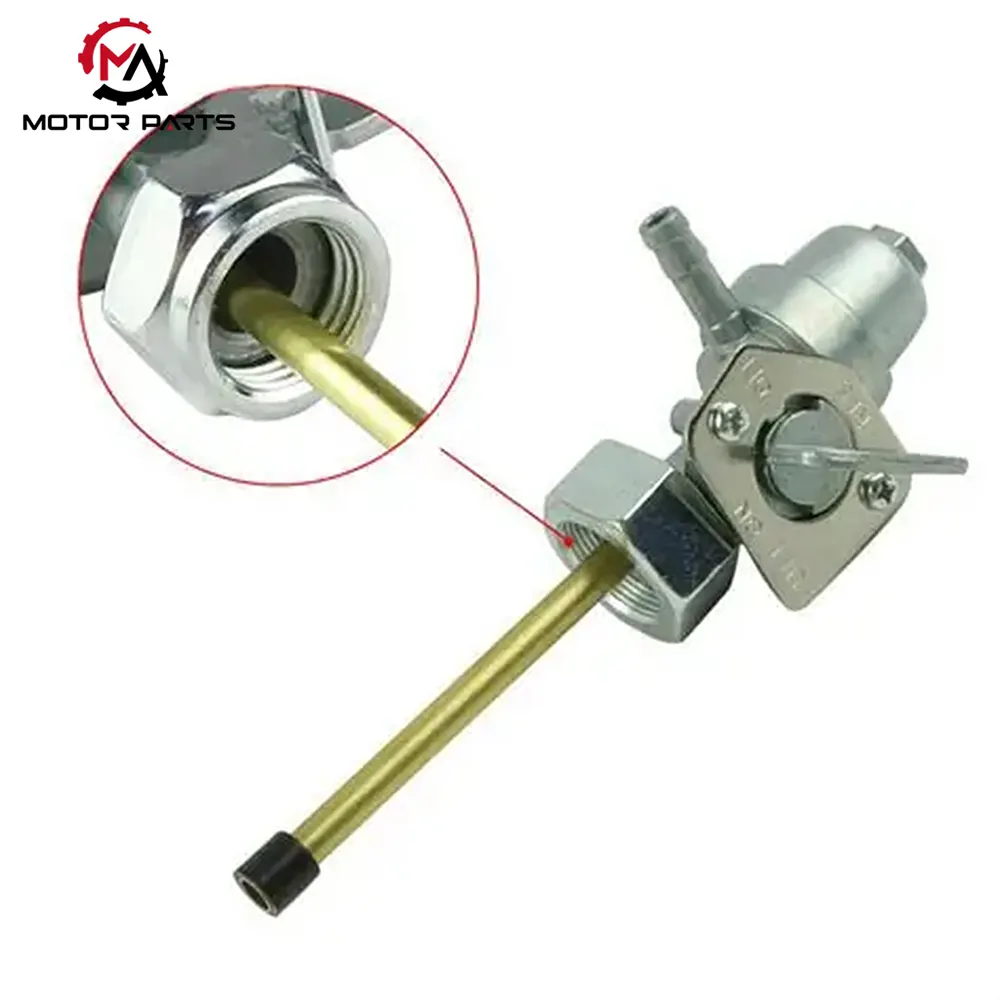
Gear function: "ON" (main fuel): used when there is sufficient fuel in the fuel tank, the oil switch inlet corresponds to the main fuel level in the tank;
RES (reserve oil): Switch when the main oil is exhausted, and the inlet corresponds to the reserve oil at the bottom of the fuel tank (usually with a range of 10-20 kilometers, prompt to refuel in time);
OFF: Used during parking or maintenance to cut off fuel supply and prevent oil leakage.
Structural composition: The manual oil switch consists of a valve body, valve core (with oil passage), handle, and sealing ring (oil resistant rubber to prevent oil leakage); The vacuum oil switch additionally includes a vacuum diaphragm and spring, which control the movement of the diaphragm through vacuum degree to achieve oil passage opening and closing.
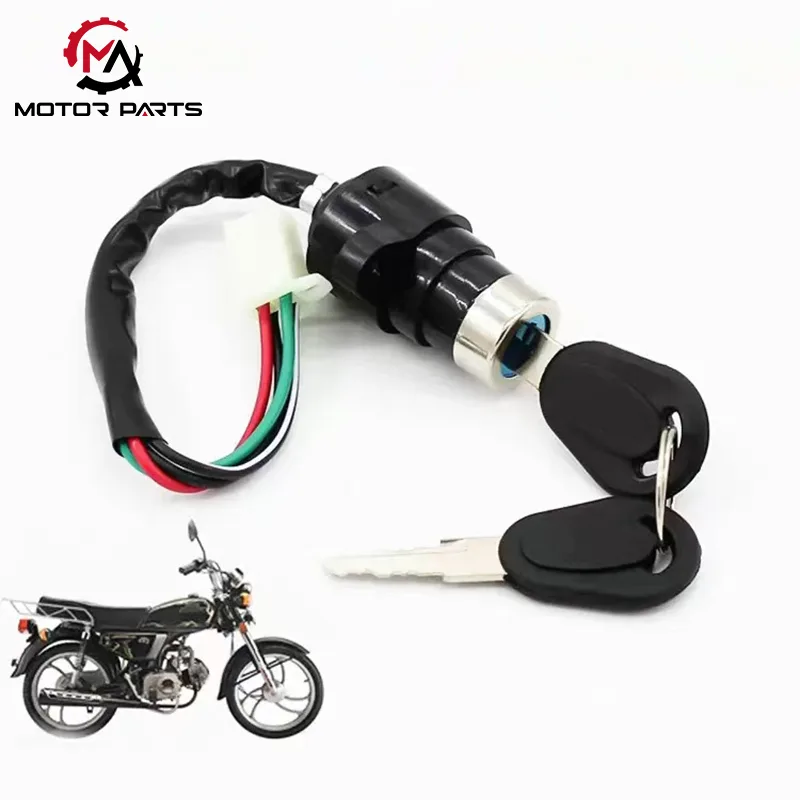
Motorcycle ignition switch
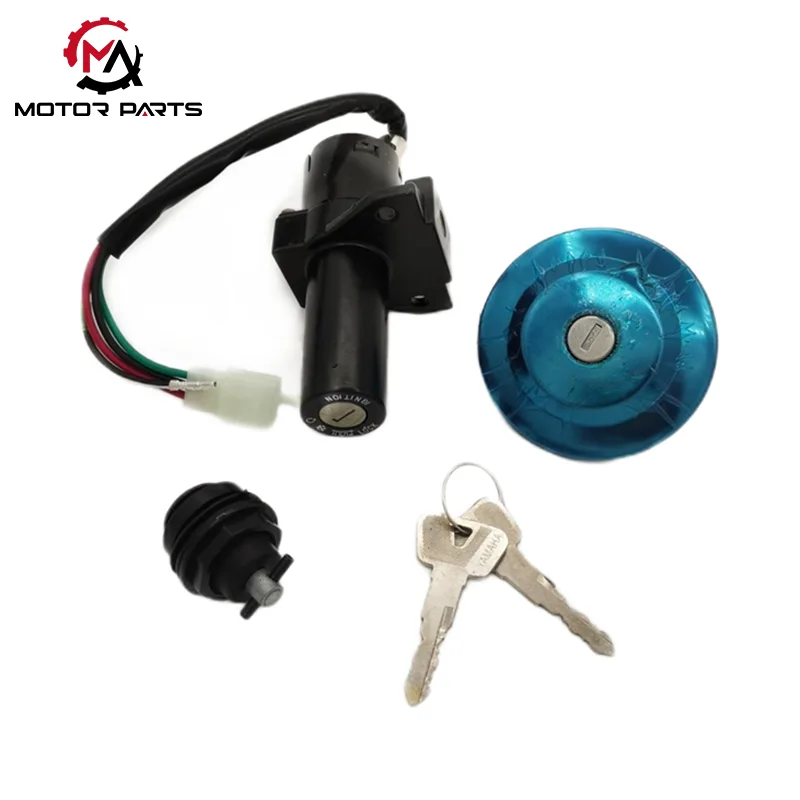
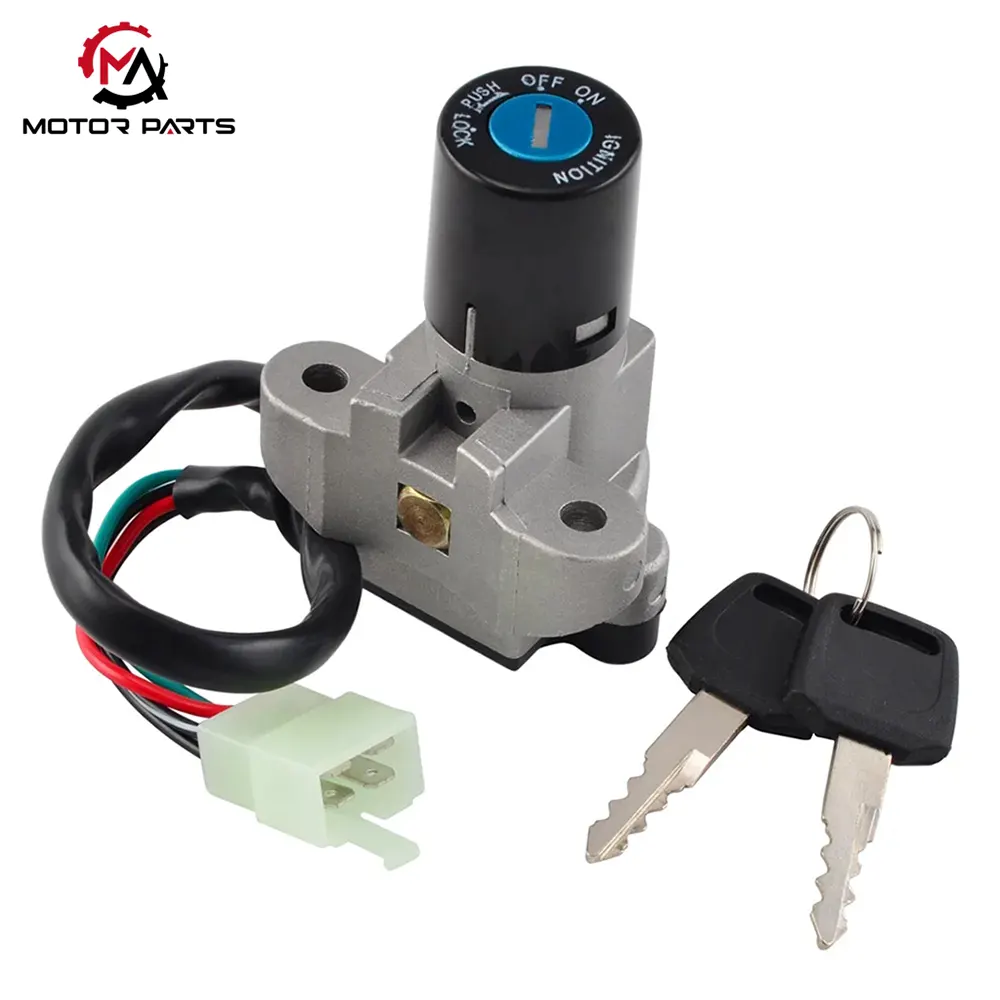
The ignition switch is the main control center of the motorcycle electrical system, directly controlling the on/off of the ignition system, power supply system, and auxiliary system, equivalent to the "vehicle power key". It switches gears by rotating the key, achieving the control of "OFF → ON → START". The specific functions include: supplying power to the igniter, high-voltage pack, instrument panel, etc. when turned on; Control the operation of the starter motor through the starter relay during startup; Cut off all electrical system power when shutting down to prevent leakage or misoperation.
Gear and Function: "OFF": After the key is removed, all power is cut off, and the ignition system and fuel supply system do not work. It has anti-theft function (some models have lock cylinders to prevent theft and prevent violent opening);
ON: When the key is turned to this gear, the instrument panel lights up, the igniter, high-pressure pack, and fuel switch (vacuum type) are powered on, and fuel supply begins. Wait for the engine to start;
START ": Further rotation is required on the basis of the" ON "position to connect the power supply of the starter relay coil, drive the starter motor to operate, and automatically rebound to the" ON "position after releasing the key (to prevent the starter motor from working for a long time).
Structure composition: It consists of a lock cylinder (with key tooth slot), a contact group (different gears correspond to different contact on/off), anti-theft mechanism (such as pin lock, magnetic anti-theft), and wiring terminals (connecting the vehicle harness). The shell is made of metal material and has a waterproof rating of IPX5.
Motorcycle magneto coil
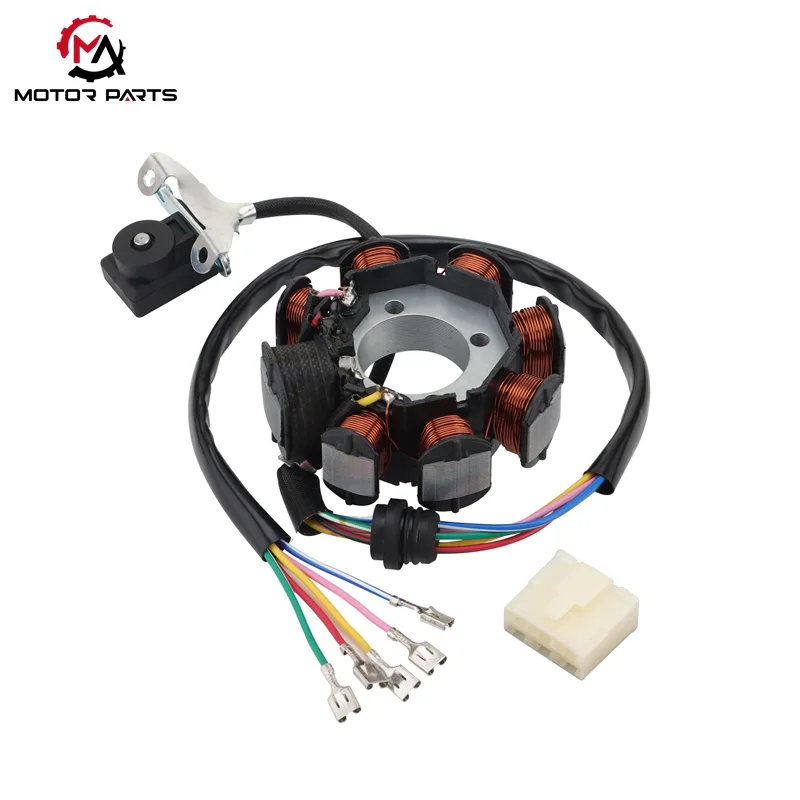
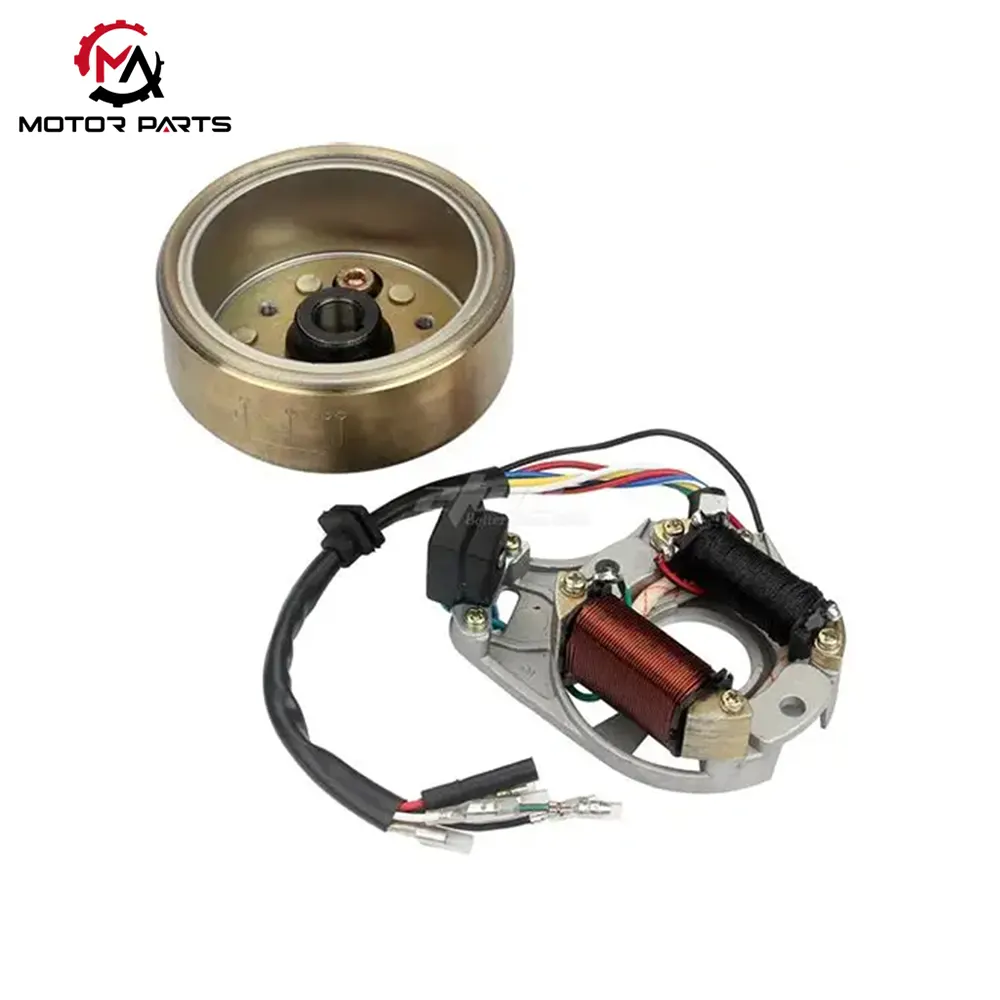
The magneto coil is the core component of the motorcycle power generation system, which, together with the magnetic steel (installed on the crankshaft), forms the magnetic motor. It is responsible for generating alternating current when the engine is running, supplying power to the vehicle's electrical system (such as the igniter and dashboard) and charging the battery. At the same time, it provides basic electrical energy for the ignition system (some models' magneto coils include ignition coils, directly providing low-voltage power to the high-voltage pack). It is one of the "energy sources" of the ignition system - if the magneto coil fails, the battery cannot be charged, and the ignition system will eventually become inoperable due to the depletion of power.
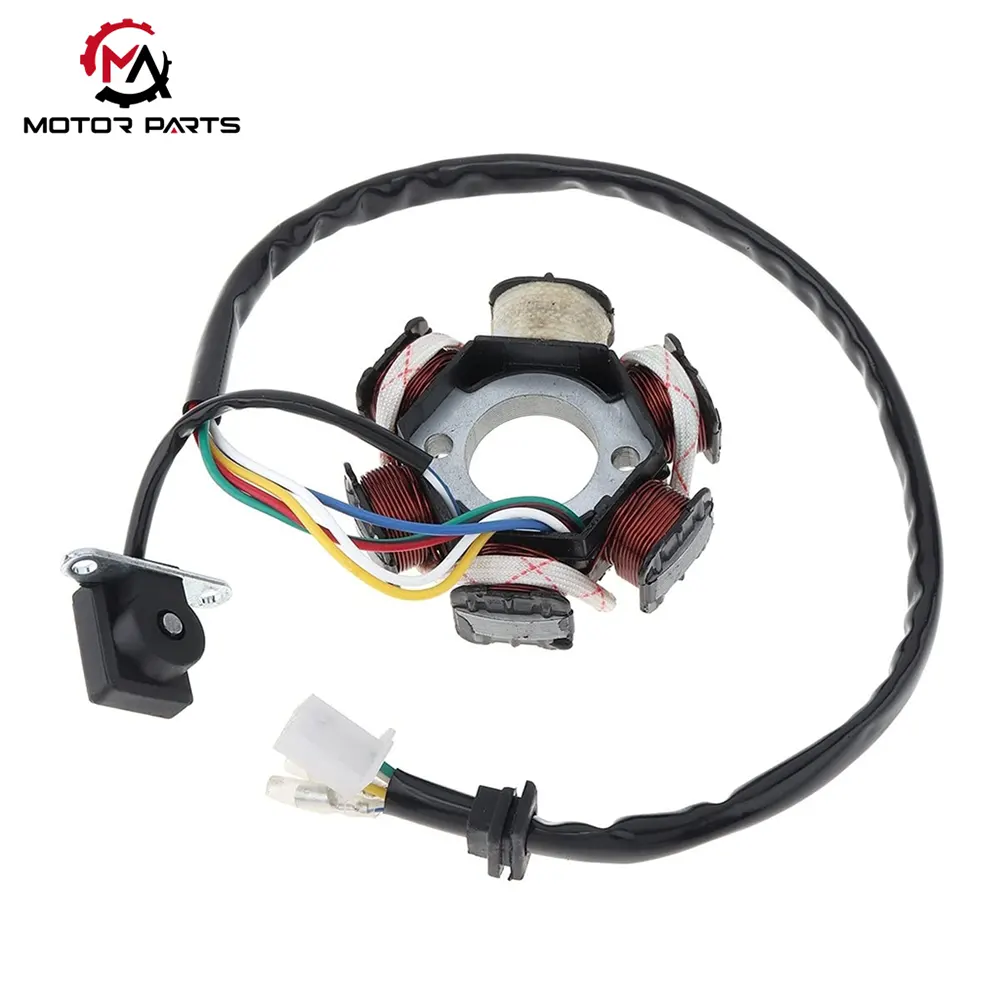
Type classification: Classified by function, it can be divided into charging coils (main power supply, generating around 12V AC power, rectified into DC power by rectifiers), ignition coils (supplying power to the ignition system, generating low-voltage power, some models are integrated with charging coils), and trigger coils (generating ignition trigger signals, transmitting them to the igniter, and controlling the ignition timing).
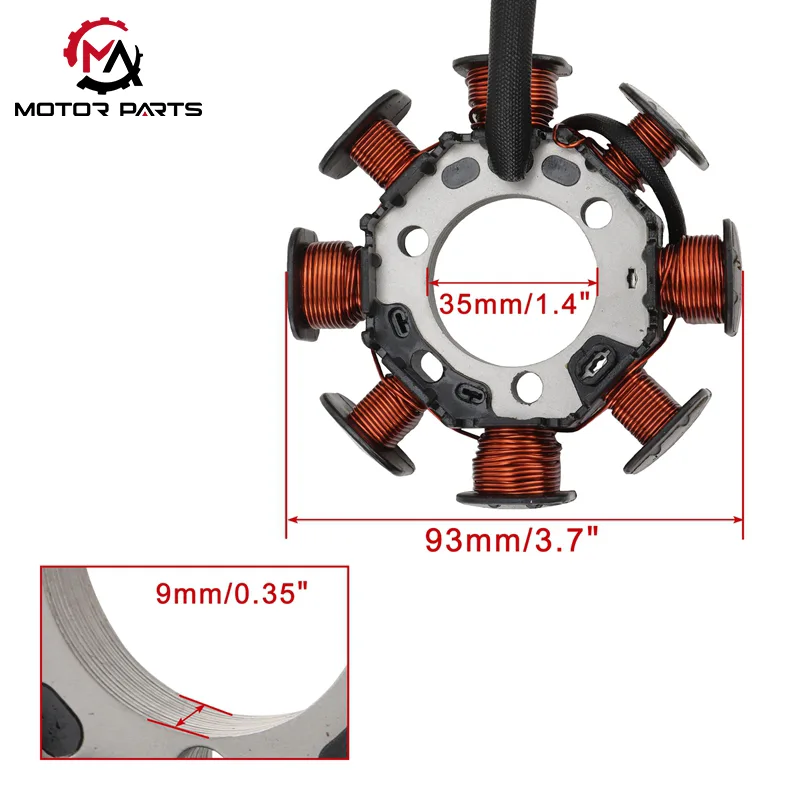
Structural composition: It consists of an iron core (laminated with silicon steel sheets), enameled wire coils (with more turns and thicker wire diameter for charging coils and fewer turns and thinner wire diameter for ignition coils), insulation skeleton (high-temperature resistant plastic, isolating coils from the iron core), and lead wires (with waterproof plugs). It is installed as a whole on the engine stator disk and generates induced current by relative movement with the magnetic steel (with permanent magnets) on the crankshaft.
Core parameters: Charging coil output voltage (10-15V AC at idle, 20-40V AC at medium and high speeds), ignition coil resistance (primary 0.5-1.5 Ω, secondary 5-10k Ω), trigger coil output voltage (0.5-2V AC, pulse signal can be observed through oscilloscope).
Max Trading's precise segmentation and matching of motorcycle ignition system market
Southeast Asia/South Asia: Focus on 150-200cc economy models, prefer universal CDI igniters that are compatible with Honda and Suzuki original interfaces, with a unit price controlled at 20-30 US dollars, and can withstand high temperature and high humidity environments above 40 ℃, with a dustproof and waterproof rating of IP65;
Europe/North America: Targeting the market for modifying large displacement vehicles with a displacement of 400cc or more, BMW、 More than 60% of high-end car models such as Harley Davidson are compatible, emphasizing the need for coil on plug technology and precise control of ignition advance angle through CE and EPA certification. The unit price can reach 150-300 US dollars;
Latin America/Middle East: Between the two, tricycle specific ignition modules that emphasize cost-effectiveness and need to adapt to complex local road conditions with reinforced seismic structures are more favored.